Christmas Eve and Christmas Day in Croatian tradition are not just holidays — they are moments deeply infused with symbolism, togetherness, and gratitude. These are the days when families gather around the table, remember old customs, and enjoy flavors that carry the warmth of home. Christmas Eve dishes reflect respect for tradition and the spiritual preparation for Christmas itself.
In many parts of Croatia, the tradition of fasting is still observed, meaning no meat is eaten on Christmas Eve — instead, fish is prepared. This is why fish takes center stage on the Christmas Eve table, with preparations that vary from region to region. Every family has its own way of preparing it, and recipes are passed down from generation to generation.
Fish on Christmas Day also holds an important symbolic role, continuing the spirit of Christmas Eve but in a more festive tone. The Christmas table becomes rich with flavors, abundance, and joy. During this time, fish symbolizes blessing, peace, and a new beginning.
Fish also carries a deeper meaning within holiday traditions. In Christianity, it symbolizes faith, purity, and life, which gives its presence in Christmas Eve and Christmas Day dishes a spiritual dimension. Over the centuries, this symbolism has intertwined with local customs and culinary habits, creating a unique blend of simplicity and festivity that still forms the heart of Croatian holiday traditions today.
The History and Symbolism of Fish in Holiday Traditions
Fish holds a deeply rooted meaning in Christian tradition. The early Christian communities used the fish symbol discreetly as a sign of faith, as the Greek word ichthys refers to Christ. Within the liturgical calendar, there are days of fasting and abstinence during which believers refrain from eating meat from warm-blooded animals and choose more modest foods instead. This is why fish on Christmas Eve is often highlighted as a symbol of preparation, purity, and spirituality.
The historical reasons behind avoiding meat on Christmas Eve come from church discipline and the monastic practices of early Christianity. Fasting meant consciously giving up luxury and turning toward silence, prayer, and solidarity. Meat was considered a food that symbolized strength and prosperity, so its absence on Christmas Eve was a clear call for modesty and mindfulness before Christmas. Fish, on the other hand, represented moderation, simplicity, and accessibility.
For these reasons, a rich variety of recipes developed over the centuries, and Christmas Eve dishes remain recognizable today for their distinctive freshwater flavors.
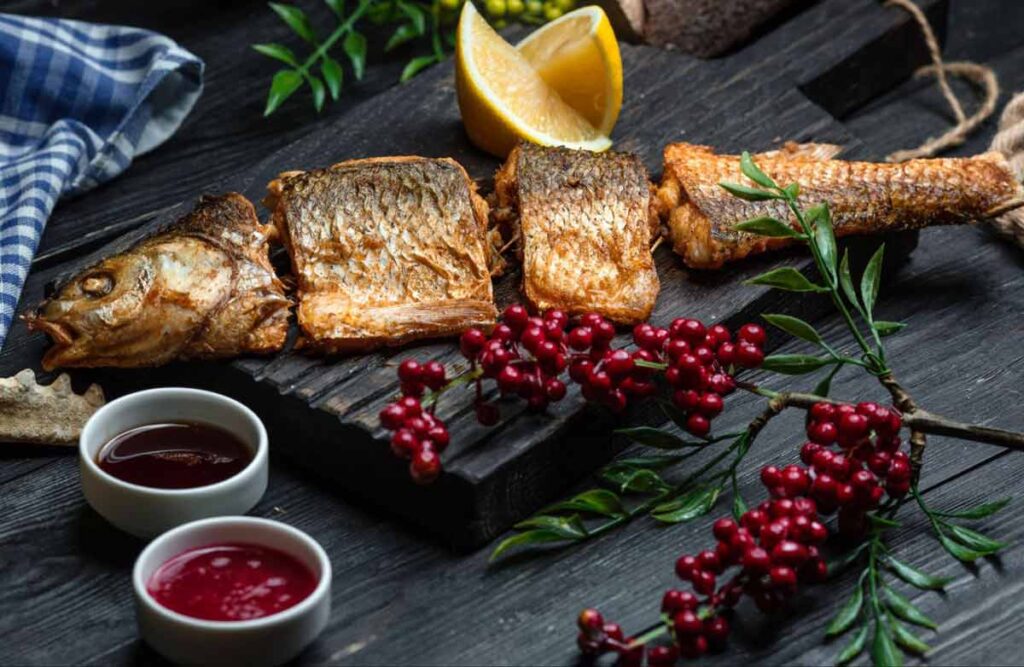
Across different regions of Croatia, you can clearly see how faith and local gastronomy intertwine. In continental Croatia, freshwater fish dominate the table — carp roasted on wooden forks, oven-baked trout, and catfish prepared in a paprika stew are common. In many families, the Christmas Eve fish dish is simple and modest, while the fish served on Christmas Day is sometimes more elaborate, accompanied by richer side dishes and more festive courses.
Religious and cultural influences blend with everyday history. Trade routes, fishing seasons, fasting periods, and regional ingredients have all shaped local recipes. In cities, the custom of buying fresh fish just before the holidays became widespread, while in rural areas, families preserved simple yet inventive preparation methods. This is why Christmas Eve dishes are more than just a collection of recipes — they are a living tradition that connects faith, history, and togetherness.
Today, these customs naturally evolve alongside modern tastes. The core message remains the same: during the holiday season, fish bridges modesty and festivity, reminding us of our roots and creating space for gatherings around the shared table. In this way, Christmas Eve dishes and fish on Christmas Day remain faithful to tradition while continuing to tell a new story in every home.
The Most Common Christmas Eve Dishes in Croatia
Carp — the King of Continental Christmas Eve
Roasted Carp on Wooden Forks (Šaran na Rašljama)
Carp is the most recognizable freshwater fish in continental Croatia and a true symbol of Christmas Eve. Known for its rich, meaty flavor, it has been prepared in various ways for centuries, yet roasted carp on wooden forks remains a classic that evokes memories of the smell of fire and family gatherings.
The wooden forks (rašlje) are usually made from hazel or grapevine branches. The carp is lightly salted, brushed with oil, and roasted over a gentle fire until the skin becomes golden-brown and crispy. The meat stays juicy, while the subtle smoky aroma gives it a special depth.
It is traditionally served with potatoes baked under a peka, homemade cornbread, or polenta. This method of preparation highlights simplicity and has become a symbol of local tradition and togetherness.
Carp with Vegetables or Breaded Carp
Carp with vegetables is one of the most beloved family dishes in continental regions. Carp fillets are placed over a layer of sautéed onions, carrots, peppers, and tomatoes, then drizzled with wine and gently simmered until the vegetables absorb the fish’s aroma. The result is a tender, juicy dish that blends the flavors of river and garden.
Breaded carp, on the other hand, is a staple on many family tables. Slices of carp are coated in flour, eggs, and breadcrumbs, then fried until golden and crispy. It is best served with potato salad with onions or sauerkraut. When prepared with richer side dishes, this same recipe can also become a delicious fish dish for Christmas Day.
Catfish — the Majestic Dweller of River Depths
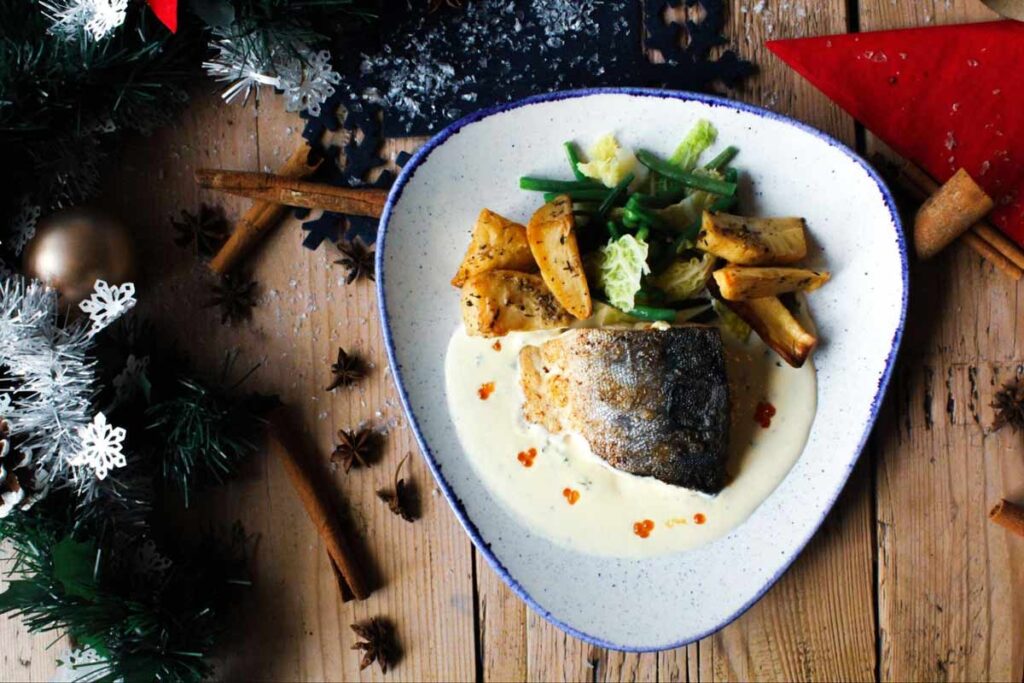
Catfish is a fish with firm, dense meat and a pronounced flavor, valued for centuries in Slavonian and Podravina cuisine. Because of its size and rich taste, it is often considered a more festive dish. In Baranja and Slavonia, it is best known in paprika stew, but many families also prepare it as a Christmas Eve dish in a simpler, leaner version — cooked with vegetables, boiled (na lešo), or lightly baked in the oven.
Grass Carp (Amur) — a Mild and Refined Choice for the Family Table
Grass carp, also known as amur or “the herbivore fish,” is one of the most appreciated freshwater species due to its delicate, mild flavor and firm yet juicy texture. Originally from Asia, amur is now also bred in Croatian fish farms, making it easily accessible and a common choice for Christmas Eve menus. Because it doesn’t have a strong fishy aroma, many families choose it as their Christmas Eve fish — a dish that appeals even to those who usually aren’t big fans of seafood.
Silver Carp (Tolstolobik) — a Hearty and Generous Fish for Larger Gatherings
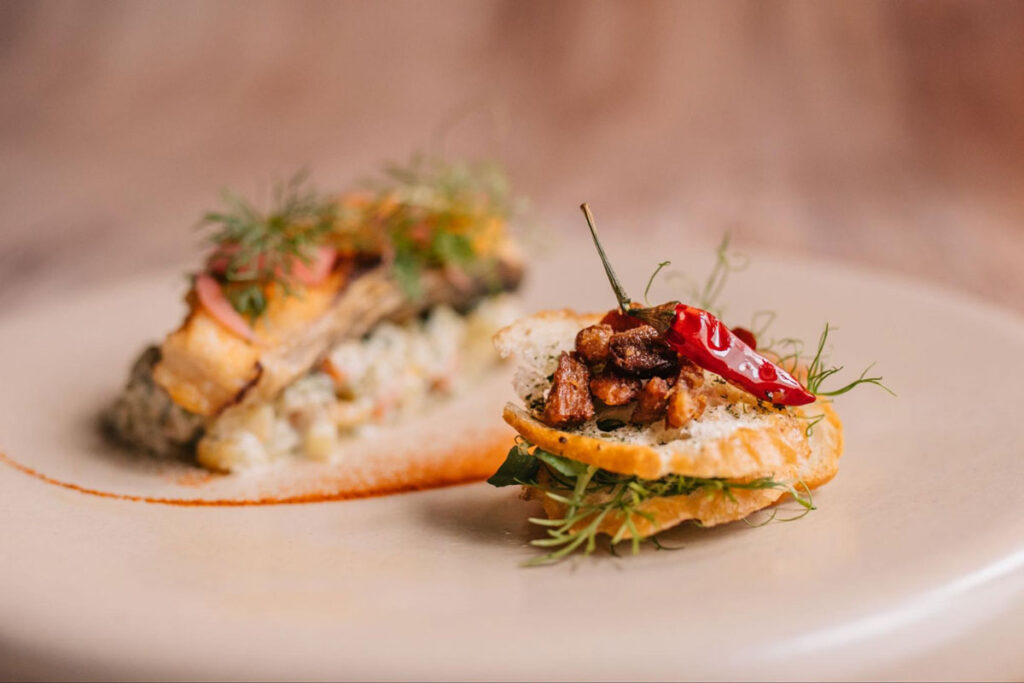
Silver carp (tolstolobik) is a species originally from Asian waters, but it has long become established in Croatia. Its meat is firm, rich, and flavorful, making it ideal for oven-baking or grilling. It is often prepared in thick slices with lemon, olive oil, garlic, and parsley, sometimes with a splash of wine. Because silver carp provides enough meat to feed a large family, it has become a popular choice when preparing Christmas Eve dishes in households with many members.
In addition to being filling, it has a balanced flavor that pairs well with a variety of side dishes, from potatoes to roasted vegetables. Thanks to its hearty texture and full taste, it is also frequently served as a Christmas Day fish, especially in families who enjoy traditional, substantial meals.
Fish such as carp, catfish, grass carp, and silver carp have been part of the Croatian holiday story for centuries. In Croatian culture, Christmas Eve fish is never just food — it is a symbol of gratitude and togetherness passed down from generation to generation.
Fish on Christmas Day — Differences in Traditions
In Croatian tradition, Christmas Eve and Christmas Day are closely connected, yet clearly separated in meaning and customs. Christmas Eve is a day of fasting and anticipation, while Christmas Day is a day of celebration, abundance, and joy. This difference is reflected in the way people eat.
Fish on Christmas Eve is almost obligatory, while fish on Christmas Day is served depending on preference, usually as part of a richer holiday lunch. After the modest Christmas Eve meal, the Christmas table becomes filled with meat, desserts, and wine, but fish still remains an important symbol — often served as an appetizer or a lighter introduction to the more festive menu.
Is Fish Mandatory on Christmas Day, or Is It Customary to Switch to Meat?
On Christmas Eve, simple, modest dishes dominate, while Christmas Day brings festive variety. In many households, people immediately switch to meat dishes such as roasted turkey with mlinci, pork, or lamb. However, many families still keep fish as the first course or as a tradition that symbolically connects the two days.
Fish on Christmas Day is therefore not mandatory, but it is often included out of respect for tradition, symbolizing purity, prosperity, and a new beginning. In coastal regions, fish remains an essential part of the holiday meal, while in continental areas, meat dishes usually take center stage, with fish serving as an introduction to the main course.
Examples from Different Regions of Croatia
Dalmatia
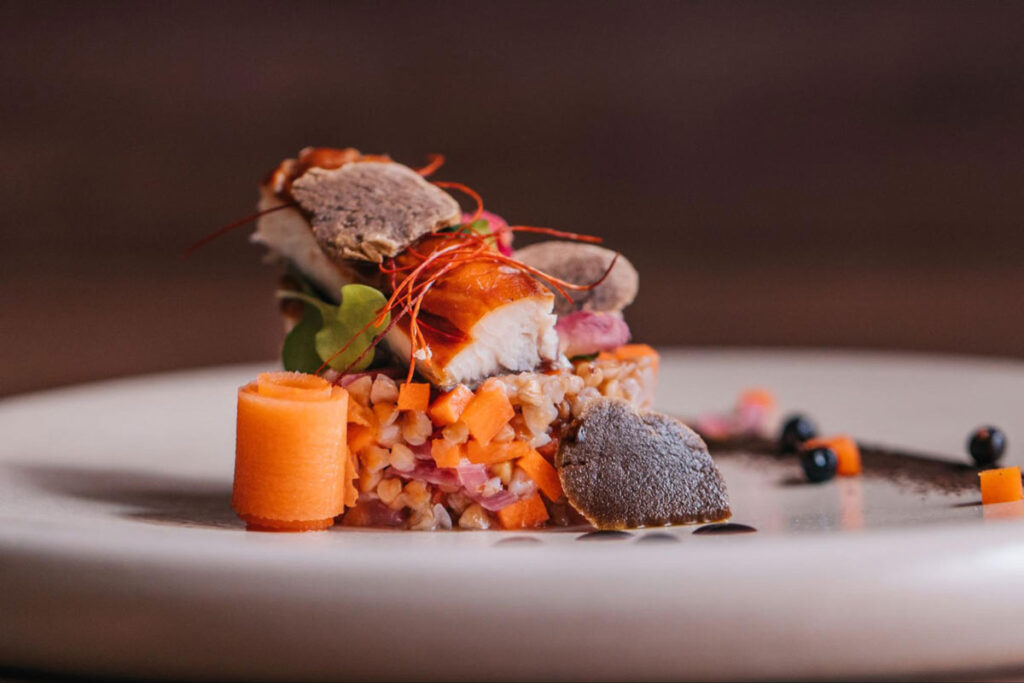
In the south of Croatia, fish holds a special place on Christmas Day. Although meat is also served, many Dalmatians like to begin the holiday with a lighter fish dish, most often boiled fish (lešo). It is typically served with Swiss chard, potatoes, and olive oil.
Slavonia
In Slavonian households, Christmas marks the return to meat dishes. After the lean Christmas Eve, the table fills with the aromas of roasted turkey, sarma, homemade sausages, and various cakes. Still, fish hasn’t disappeared from Christmas meals here either — it is often served as a cold appetizer, such as fish pâté, smoked carp, or catfish fillets preserved in oil. These dishes gently connect the spirit of Christmas Eve with the richness of the Christmas Day feast.
Istria and Kvarner
In Istria and Kvarner, the tradition combines both fish and meat. Fish for Christmas is often fresh and oven-baked with olive oil, garlic, and wine, with a touch of rosemary, while the main course is typically a meat specialty such as veal. This blend of sea and land reflects the richness of Istrian cuisine and the spirit of holiday abundance.
Zagorje and Central Croatia
In the Zagorje region, fish on Christmas Eve is almost a rule, but meat takes over on Christmas Day. Still, some families maintain the tradition of starting the Christmas lunch with a fish dish, such as carp or grass carp. These dishes symbolize peace and gentleness, while meat represents joy and celebration. In some Zagorje households, fish still holds a special place on Christmas Day, serving as a reminder of the roots and simplicity cherished by earlier generations.
Fish as an Appetizer or Main Course for Christmas
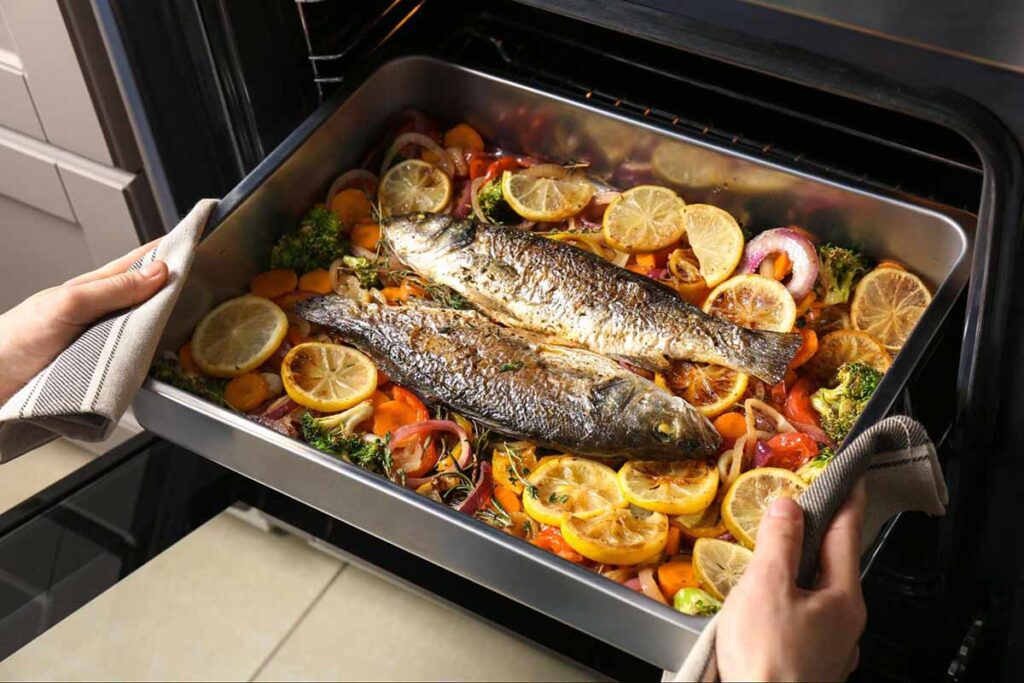
In modern interpretations of the holiday menu, fish increasingly appears as an appetizer — in the form of fish pâtés, marinated fillets, cold salads, or light soups. In this case, fish on Christmas becomes a gentle introduction to a richer lunch that later includes meat specialties. In families that remain faithful to a lighter, leaner cuisine, fish also becomes the main course, often baked in the oven with vegetables, accompanied by mild wine and fresh herbs.
Fish carries both a practical and symbolic role. It gently stimulates the appetite, doesn’t burden the stomach, and brings a sense of freshness after the lean Christmas Eve meal. At the same time, it maintains a connection with faith and tradition. Fish on Christmas Eve represents quietness and preparation, while fish on Christmas Day symbolizes peace and prosperity that follow the fast.
This balance between simplicity and festivity is what makes fish an essential part of Croatian holiday tradition — whether served as the main course or as a subtle reminder of the deeper meaning of Christmas.
How to Choose and Prepare Fish for Christmas Eve and Christmas Day
The holiday table in Croatia is unimaginable without fish — whether prepared modestly in the spirit of fasting or lavishly as the centerpiece of the Christmas Day meal. But for Christmas Eve and Christmas Day fish dishes to truly shine on the plate, freshness, proper preparation, and a careful choice of seasonings are essential. These details make the difference between an average dish and one that carries the scent of home, tradition, and the river it comes from.
Tips for Buying Fresh Fish
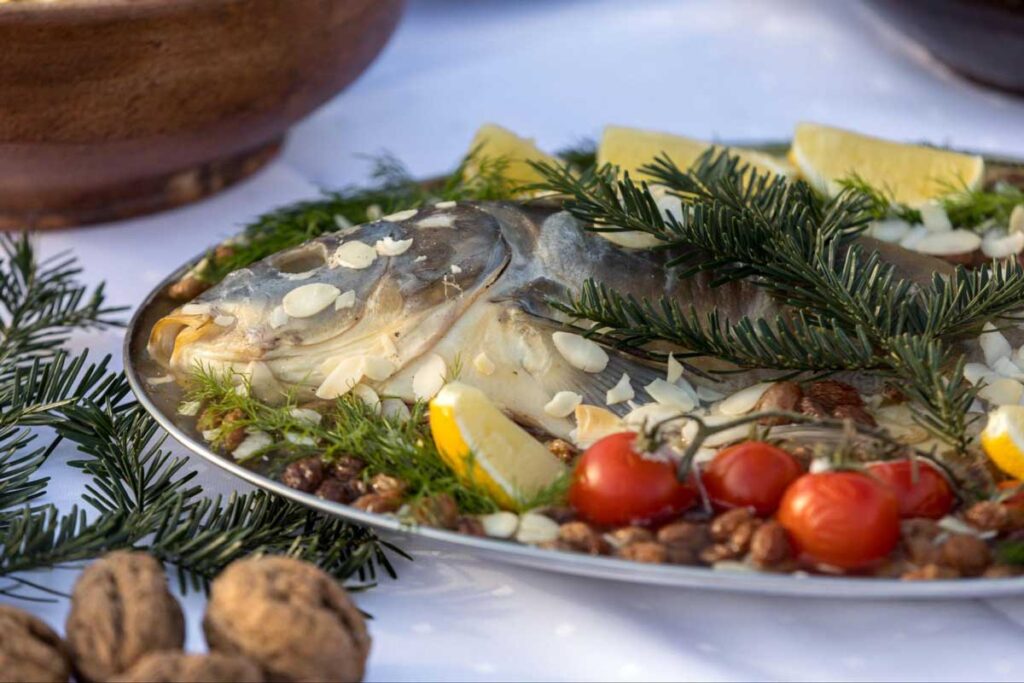
When choosing fish, whether freshwater or saltwater, the most important thing is to pay attention to freshness. Fresh fish has clear, slightly protruding eyes, firm and elastic flesh, and a natural, mild smell. The gills should be red or pink, and the skin shiny and moist. If you are buying cleaned fish, make sure the flesh is not dry and hasn’t lost its color. If purchasing frozen fish, check that it isn’t covered in a thick layer of ice and isn’t misshapen — this can indicate that it has been thawed and refrozen multiple times.
How to Properly Clean and Marinate Fish
A properly cleaned fish is the foundation of every successful dish. First, the scales are removed (if the fish has them), then the fish is carefully opened and cleaned from the inside. It is important to remove the gall bladder so the flesh doesn’t turn bitter. After cleaning, the fish is rinsed with cold water and dried with kitchen paper.
Marinating is the key to tenderness and aroma. The simplest — and most common — marinade for fish contains olive oil, lemon juice, garlic, fresh parsley, salt, and pepper. For freshwater fish, a bit of white wine or apple cider vinegar can be added to reduce the earthy smell and enhance freshness. The fish should be marinated for at least 30 minutes, while larger pieces can rest in the refrigerator for several hours. This makes the flesh soft, fragrant, and ready for baking or cooking.
The Best Seasonings and Techniques for Baking or Cooking Fish
When it comes to seasoning, less is often more. In traditional Croatian cuisine, Christmas Eve fish is kept simple — salt, pepper, garlic, parsley, and lemon are almost always enough, while in continental regions a bit of paprika or onion is commonly added. For preparing fish on Christmas Day, richer additions such as butter, fresh herbs, wine, or vegetable-based sauces can also be used.
Baking in the oven is one of the most common preparation techniques. Fish is baked on parchment paper or in a heatproof dish, often together with potatoes, onions, and olive oil. Smaller fish can be baked whole, while larger ones are usually cut into steaks. The ideal temperature is around 180 °C (356 °F), and the cooking time depends on the size of the fish — about 20 minutes for smaller fish and up to 40 minutes for larger ones.
If the fish is grilled or roasted on wooden forks, it’s important that the heat is moderate so the meat stays juicy.
Boiling fish (na lešo) or steaming it is an excellent way to preserve its natural flavor and nutritional value. The fish is placed into boiling water with a bay leaf, a few peppercorns, lemon, and a drizzle of olive oil. After cooking, it can be topped with a bit of oil and lemon or served with boiled vegetables.
Such Christmas Eve dishes highlight simplicity and purity, while fish for Christmas Day is often prepared in more elaborate variations — baked in a sauce, served with roasted vegetables, or paired with creamy side dishes such as polenta or celery purée.
No matter the method of preparation, fish always carries a message of tradition. Carefully chosen, properly cleaned, and simply seasoned, the fish served on Christmas Eve and Christmas Day brings the most precious things to the table — the taste of home, the warmth of family, and the peace of the holiday season.
Through the centuries, fish has become much more than just an ingredient on the Croatian holiday table. It connects faith, tradition, and family values that are passed down from generation to generation. Christmas Eve and Christmas Day are therefore not only days of a bountiful table, but moments in which we remember our roots, customs, and the deeper meaning that food can carry.