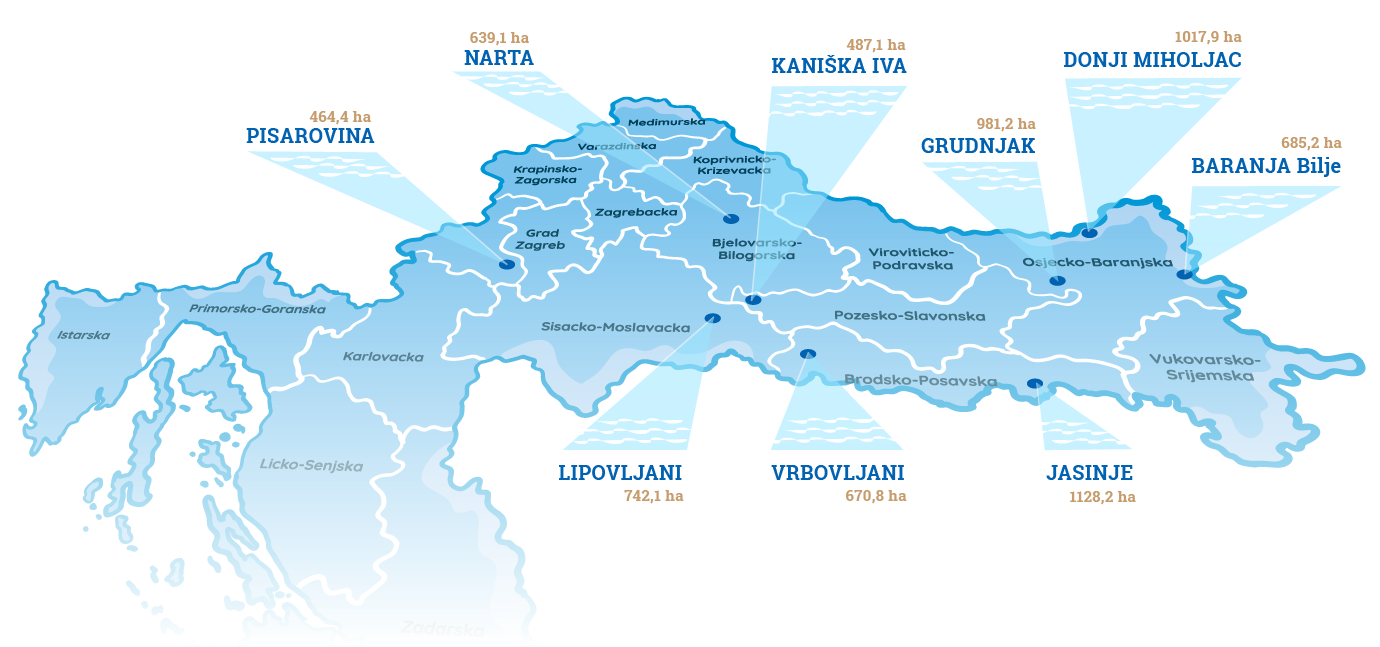
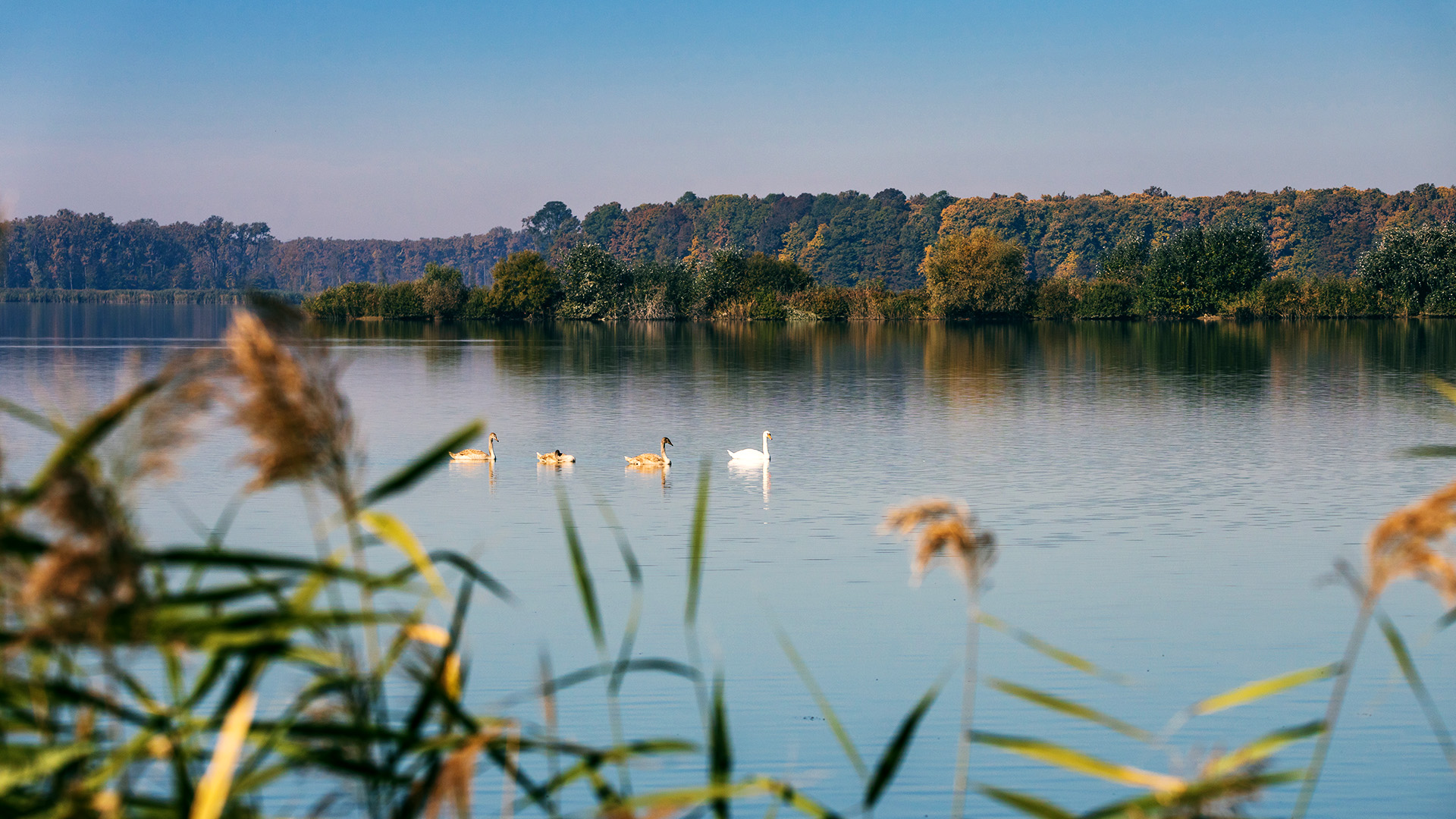
Our fish ponds are surrounded by clean, untouched nature.
Our biggest and oldest fish pond, Grudnjak, constructed in 1912, sits at the foothills of Papuk mountain, a protected nature park rich in forests, mountain springs and creeks, which bring clean, crystal-clear water right into our fish pond. This is important, because the better the water, the better the fish.
Freshwater fish farming has a long-standing tradition in Croatia, especially along the rivers Drava, Sava and the Danube.
Fish farms date back to the Middle Ages, when carp ponds were a mandatory addition to monasteries.
The first fish ponds in Croatia were built in early 20th century, mostly in Slavonia, on what used to be wetland forests and meadows. Slavonia was the ideal region because of the springs of clear water that ran down the nearby mountains of Psunj and Papuk, including numerous creeks that flowed through the Slavonian plain and fed the fish ponds.
Our fish ponds
Biodiversity
Fish ponds are wetland habitats that are home to more than 40% of the country’s plant and animal species.
About 90% of the population of some waterfowl species dwell in fish ponds (e.g., the whiskered tern (Chlidonias hybrida), the ferruginous duck (Aythya nyroca)). Carp ponds are natural habitats of aquatic plants and reedbeds, which are essential for nesting. With the abandonment of fish farming in many carp ponds, Croatia’s wetland habitats have become overgrown and ultimately disappeared over the last 30 years. In those that have remained, biodiversity has been adversely affected by an unpredictable water regime and increasingly intense droughts.